
Why TechnologyOne Keeps Winning
While the AI Ground Shifts Beneath Enterprise Software

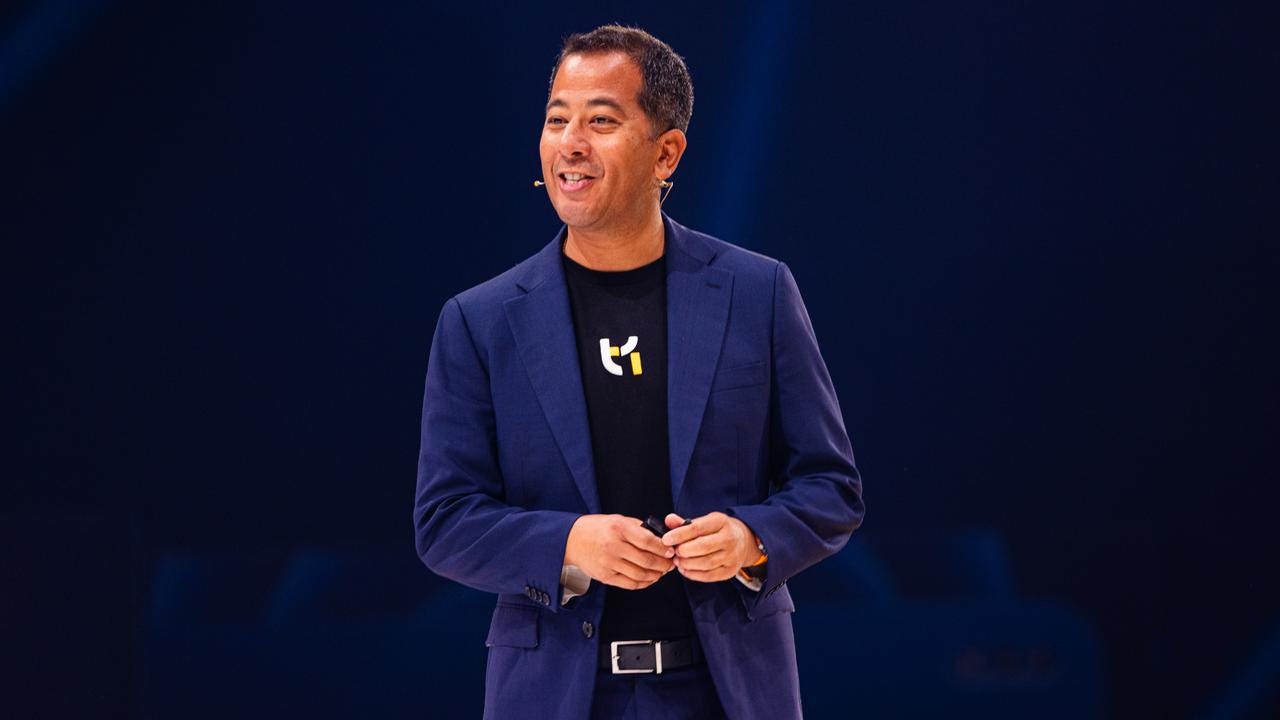
For much of the past two years, the enterprise software market has been trapped in a strange contradiction. Artificial Intelligence has driven one of the largest waves of technology investment in modern history, yet many software companies have simultaneously experienced valuation pressure as investors ask uncomfortable questions about the future role of traditional applications. The logic is straightforward enough. If Large Language Models increasingly become the interface to work, if agents begin orchestrating tasks across systems, and if workflow intelligence becomes abstracted above the application layer, then what happens to the value of the application itself? Across global software markets, that question is weighing heavily on investor sentiment. Yet TechnologyOne has largely escaped this broader correction.
At first glance, that seems counterintuitive. TechnologyOne operates in precisely the types of environments many investors would traditionally classify as vulnerable to disruption. That is, ERP and Corporate Services with a focus on government administration and higher education systems. Finance, payroll, procurement and regulatory workflows are exactly the kinds of operational software domains that Silicon Valley has spent the better part of a decade claiming are ripe for reinvention.
And yet the market continues to reward TechnologyOne with premium style valuations while much of the broader, and arguably more sophisticated, software market wrestles with existential AI questions. While the client narratives have long been conflicted, this can’t be dismissed as irrational exuberance, and in many respects, the market’s confidence is entirely understandable.
TechnologyOne has now spent decades building one of the most operationally embedded software estates in Australia and New Zealand, while continuing to expand, albeit very slowly, into the United Kingdom. It has also managed to execute a disciplined (guardrailed) transition toward SaaS. And it has consistently expanded Annual Recurring Revenue. And it has delivered predictable operational performance across cycles where many software companies have struggled to maintain credibility. In a market increasingly obsessed with execution certainty, TechnologyOne has become almost synonymous with operational predictability. That is what matters enormously in the current AI environment.
Because while AI creates excitement, it has also created its own uncertainty economy. Investors are trying to determine which software companies become stronger as AI adoption accelerates, and which become progressively marginalised as intelligence shifts upward into orchestration layers and agentic operating models. But right now, the market clearly believes TechnologyOne belongs in the first category.
The reasoning is relatively straightforward. TechnologyOne’s customer base consists largely of organisations that move carefully, procure cautiously, and carry enormous operational and regulatory complexity. Local governments do not casually replace payroll systems. Universities do not rapidly replatform finance environments because a new AI startup emerges. Government entities do not embrace architectural experimentation at the pace of venture-backed technology firms.
These organisations value continuity, governance, operational integrity, auditability, and institutional trust. In many cases, they also operate with comparatively low enterprise architecture maturity and constrained technology execution capacity. That creates exceptionally high switching costs and extraordinarily sticky customer relationships. This is precisely why TechnologyOne’s position became powerful.
The company does not merely provide software. More like an operational foundation where its target work exist inside tightly integrated environments, and where the value of the whole becomes greater than the sum of the modules. AI, in the form they hhave come to market with, initially strengthens that proposition because AI performs best when operating against unified operational context. This is exactly why TechnologyOne’s AI messaging to the investor market has increasingly revolved around the concept of a single data foundation and integrated operational visibility, and it is a proposition its customer base, en masse, has shown remarkably little appetite to collectively challenge.
But there is another critical factor driving market confidence that should not be overlooked. TechnologyOne is not merely telling its AI story but actively attempting to monetise AI directly and immediately through its existing installed base. The significance of PLUS is not simply that it adds AI capabilities to elements of the platform. The significance is that it creates a near-term ARR expansion mechanism inside one of the most captive customer environments in the Australian software market.
The company is effectively pursuing a large-scale value extraction strategy from its existing customer base by layering AI-enabled capability across operational modules customers already depend on. Analysts are increasingly focused on what TechnologyOne has identified as a A$80–90 million pipeline alongside PLUS-related expansion opportunities. Importantly, this is not primarily dependent on winning large volumes of new logos. In fact, there has been little whitespace success for them. The strategy is heavily oriented toward expanding wallet share within customers already deeply embedded inside the TechnologyOne ecosystem. Ultimately that matters because it changes the risk profile of the AI story.
TechnologyOne does not currently need to convince the broader enterprise market to completely rethink its operating model. It largely needs to convince existing customers that AI-enhanced workflows, reporting, automation, and operational assistance create enough value to justify additional ARR uplift across finance, HR, payroll, procurement, and related functions. In today’s environment this is a fundamentally easier commercial motion than attempting to displace competitors through aggressive net-new AI-led transformation programs.
In many respects, TechnologyOne benefits from what could best be described as a controlled operational garden. Its customer base sits within relatively protected environments characterised by long procurement cycles, low disruption velocity, and strong preference for trusted incumbents. The financial market likes this because it creates highly predictable ARR expansion pathways while simultaneously reducing the immediate threat of AI-driven displacement. That combination is exceedingly rare.
For the more mature-minded tech-enabled organisation, this still leaves a more complicated strategic question. That is, not whether AI strengthens TechnologyOne’s current position. In the short to medium term, it almost certainly does. But what happens in the next phase of enterprise AI. Because the second phase of AI transformation may look very different from the first.
I am more than happy to concede that phase one can reward AI-enabled systems of record. Phase two and beyond will still be a game of systems of execution. And that distinction matters enormously.
The current AI cycle largely revolves around embedding intelligence inside existing workflows and applications. But the longer-term direction of enterprise AI increasingly points toward orchestration. Multiple agents from multiple vendors operating across finance, HR, procurement, governance, service delivery, analytics, and operational platforms, dynamically coordinating work across an increasingly hybrid enterprise architecture. In that environment, the strategic centre of gravity begins to shift.
Under that scenario, the danger for traditional ERP vendors in an agentic era is not replacement, but longer-term relegation. Systems of record will remain essential. Finance still matters. Payroll still matters. Governance still matters. Regulatory compliance still matters. But the platform that orchestrates work across the enterprise may ultimately hold the greater strategic influence.
This is where the deferred long-term architectural question around TechnologyOne begins doesn’t go away. Their historical strength has come from controlling highly integrated operational environments inside relatively bounded domains. But agentic orchestration increasingly rewards openness, extensibility, workflow abstraction, and cross-platform execution capability. These are fundamentally different strategic muscles.
Companies such as ServiceNow, Salesforce, Microsoft, and IBM are all increasingly positioning themselves around this higher orchestration layer. Not merely as application vendors, but as operational coordination platforms. These are strong lead indicators of future change. But that does not mean TechnologyOne suddenly becomes vulnerable.
In fact, what we are seeing is that many organisations in local government and higher education may be years away from fully embracing these broader agentic operating models. Operational discipline, governance, and trusted execution still matter enormously. The market may also be correctly recognising that the next five years matter more than the next fifteen.
TechnologyOne’s appointment of Barry Dietrich into the Executive Vice President of Sales and Marketing leadership role should materially strengthen the company’s ability to execute against its immediate AI monetisation opportunity through PLUS and broader installed-base expansion. In many respects, this makes it less a story about speculative AI disruption and more a trust-based story about disciplined value extraction from a highly embedded operational ecosystem.
TechnologyOne may ultimately prove that tightly integrated operational suites become more valuable in the AI era, not less. The market clearly believes that possibility today. But it remains without question, that the ground beneath enterprise software is shifting. And the unanswered strategic question is whether TechnologyOne is building the future operational orchestration layer of the enterprise, or strengthening the transactional foundations beneath somebody else’s.